
How to Complete Census 2027 Self-Enumeration Safely
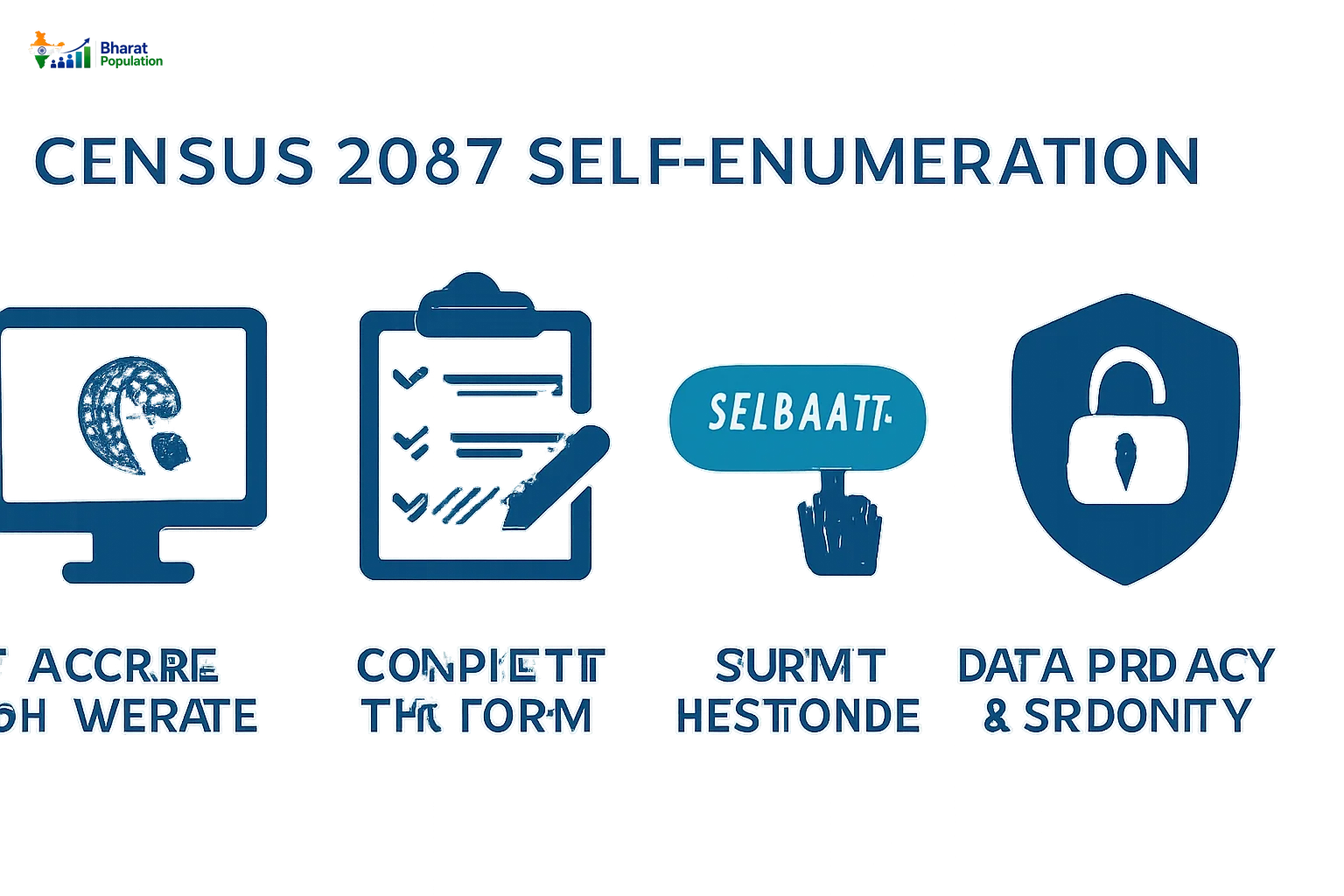
Introduction to Census 2027 Self-Enumeration
Census 2027 marks a significant transition in India’s data collection methods, being the first census to utilize digital facilities extensively. Among the innovations is the Self-Enumeration (SE) option, which allows households to provide their census information online. This guide serves to help you navigate the Self-Enumeration process safely and correctly.
Understanding Self-Enumeration
Self-Enumeration is an optional digital facility available to every household in India. Households opting for this method will submit their details through the official online portal se.census.gov.in, without the need for physical documentation. This system emphasizes convenience and privacy for users.
How Self-Enumeration Works
- Registration: One member of your household can register on the official portal.
- Data Submission: No personal documents are needed. Simply fill in and submit the required information.
- Unique Self-Enumeration ID (SE ID): After submission, you will receive an SE ID via your registered mobile number or email. This ID is crucial for subsequent interactions with enumerators.
Steps for Safe Self-Enumeration
Follow these steps to ensure that your Self-Enumeration is safe and effective:
1. Verify the Official Portal
Always use the official Self-Enumeration portal at se.census.gov.in. Watch out for scam websites and links. Check the domain carefully before entering any data.
2. Prepare Your Information
Gather necessary household information beforehand, including the total number of members, household number, and ownership status, as listed in the official guidelines.
3. Complete the Form Accurately
Ensure that all entries are correct. Double-check details such as names, relationships, and any classifications (like SC/ST) as these impact further enumeration processes.
4. Keep Your SE ID Safe
After submission, you will receive a unique SE ID. This ID is essential for the verification process and should be kept confidential. Share it only with the enumerator when they visit your home.
5. Stay Alert for Enumerator Visits
Even if you complete Self-Enumeration, an enumerator will visit your household to validate your submission. Be prepared to provide them with your SE ID and verify any details if asked.
Data Security Measures
The Census 2027 system has been designed with data security and privacy in mind:
- All submitted data is encrypted and stored on secure government servers.
- Multi-factor authentication is implemented to bolster security for users.
FAQs about Census 2027 Self-Enumeration
What if I don’t want to use Self-Enumeration?
If you prefer not to use Self-Enumeration, an enumerator will still visit your household to gather the necessary data.
Can multiple members complete the Self-Enumeration?
No, only one member can submit the household details through the portal.
Do I need to upload documents for Self-Enumeration?
No documents, such as identity proofs or photographs, are required for the Self-Enumeration process.
Will my data be secure?
Yes. The government has implemented strict data security measures, including encryption and secure storage on government servers.
How will my information be used?
Your submitted information will help in the overall data collection for the Census, subsequently aiding in national planning and resource allocation.
Conclusion
Completing the Census 2027 Self-Enumeration is a vital step in contributing to India’s demographic data. By following the guidelines outlined in this article, you can ensure a safe, secure, and efficient enumeration process.