How to Read Rural–Urban Migration Categories
Understanding Migration Categories
Rural-urban migration is a significant aspect of demographic change in India. Understanding how to read the migration categories provided in the Census can offer insights into movement trends that shape socio-economic realities. The Census 2011 data categorizes migration flows based on place of birth and last residence, distinguishing between rural and urban movements.
Defining the Categories
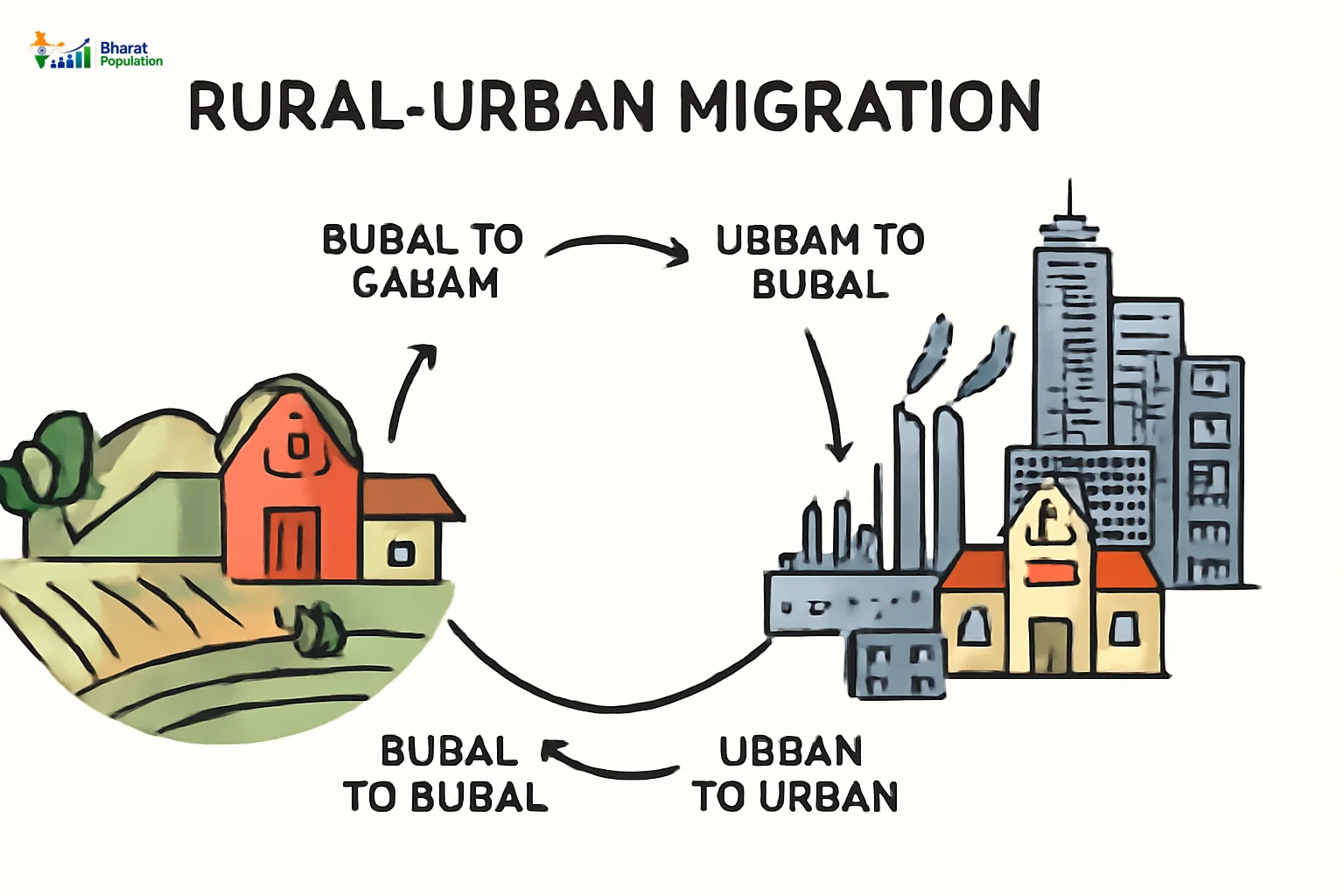
The Census classifies migration into the following categories:
- Rural-Rural: Movement between rural areas.
- Rural-Urban: Movement from rural areas to urban centers.
- Urban-Rural: Migration from urban areas back to rural locales.
- Urban-Urban: Movement within urban areas.
This classification allows researchers and policymakers to study migration patterns effectively, focusing on the flow direction and the socio-economic factors involved.
Understanding Place of Last Residence vs. Place of Birth
Migrants can be categorized based on two main criteria:
- Place of Birth: This indicates where an individual was born versus where they currently reside.
- Place of Last Residence: This captures the most recent move of the individual, offering a more immediate snapshot of migration trends.
Place of last residence is particularly insightful for understanding recent demographic shifts, while place of birth shows lifetime migration patterns.
Analyzing Duration of Residence
Furthermore, the data from Census 2011 also categorizes migrants based on their duration of stay at their current location. The reasons for migration, such as education, work, marriage, or moving with family, are also documented, adding layers to understanding.
Example of Duration Categories
Migrants are often categorized as:
- Short-term: Less than a year.
- Medium-term: One to five years.
- Long-term: More than five years.
This classification can help in assessing the stability and integration of migrants in their new locations.
Data Interpretation: Essential for Policy Making
Understanding these migration categories is critical for effective policy-making. For instance, targeted interventions can be developed for regions experiencing high rates of rural-urban migration, helping to manage the impacts on urban infrastructure and resources.
Utilizing the Data
Researchers and policymakers can utilize the following approaches:
- Trend Analysis: Identify shifts in migration patterns over time.
- Impact Studies: Analyze how migration affects urban development and rural depopulation.
- Resource Allocation: Direct resources effectively to areas in need of support.
By engaging with these datasets, India can better navigate the challenges presented by migration and work towards sustainable urban development.
Frequently Asked Questions (FAQs)
1. What is the primary reason for rural-urban migration in India?
Economic opportunities and improved living conditions in urban areas are primary drivers of rural-urban migration.
2. How can I access migration data from the Census?
Migration data can be accessed through the Census 2011 database available on the official census website or through reports on BharatPopulation.com.
3. Are there differences in migration patterns across states?
Yes, migration patterns can vary significantly across different states, influenced by local economic conditions, job availability, and educational opportunities.
4. What is the significance of the place of birth in migration studies?
The place of birth provides insights into lifetime migration patterns, showing where individuals originate and helping to identify trends over generations.
5. How does urbanization affect rural areas?
Urbanization often leads to a decline in rural population, affecting local economies and demographics, and may require new policies to manage these changes.
6. What additional information can be gathered from the migration data?
Migrants can be analyzed by age, sex, duration, and reasons for migration, contributing to a comprehensive understanding of demographic shifts.
Conclusion
Understanding rural-urban migration categories and the factors influencing these movements is key for effective governance and social planning in India. By leveraging data from the Census, stakeholders can make informed decisions to address the challenges and opportunities presented by demographic changes.