Why Census 2027 Uses Phase-Specific Training
Introduction
The upcoming Census 2027 marks a significant step in India’s demographic assessment, set to be the 16th census undertaken since the country’s independence. Scheduled to commence phases in 2026, this census introduces a carefully structured training regime tailored for its enumerators and supervisors. The incorporation of phase-specific training reflects a robust strategy aimed at enhancing the quality and consistency of the data collected.
Structure of Census 2027
Census 2027 will unfold in two primary phases:
- Phase I: Houselisting and Housing Census (HLO) – Scheduled from April to September 2026, this phase collects information on housing conditions, amenities, and household assets.
- Phase II: Population Enumeration (PE) – Set for February 2027, this phase gathers demographic, socio-economic, and migration-related data.
Why Phase-Specific Training Matters
The decision to implement phase-specific training for Census 2027 is driven by multiple factors aimed at achieving operational efficiency and data accuracy:
1. Operational Readiness
With over 31 lakh enumerators and supervisors mobilized for the census, ensuring they are well-prepared is critical. The training is designed to equip them with the knowledge and skills necessary to navigate the complexities of each phase effectively.
2. Focused Learning Modules
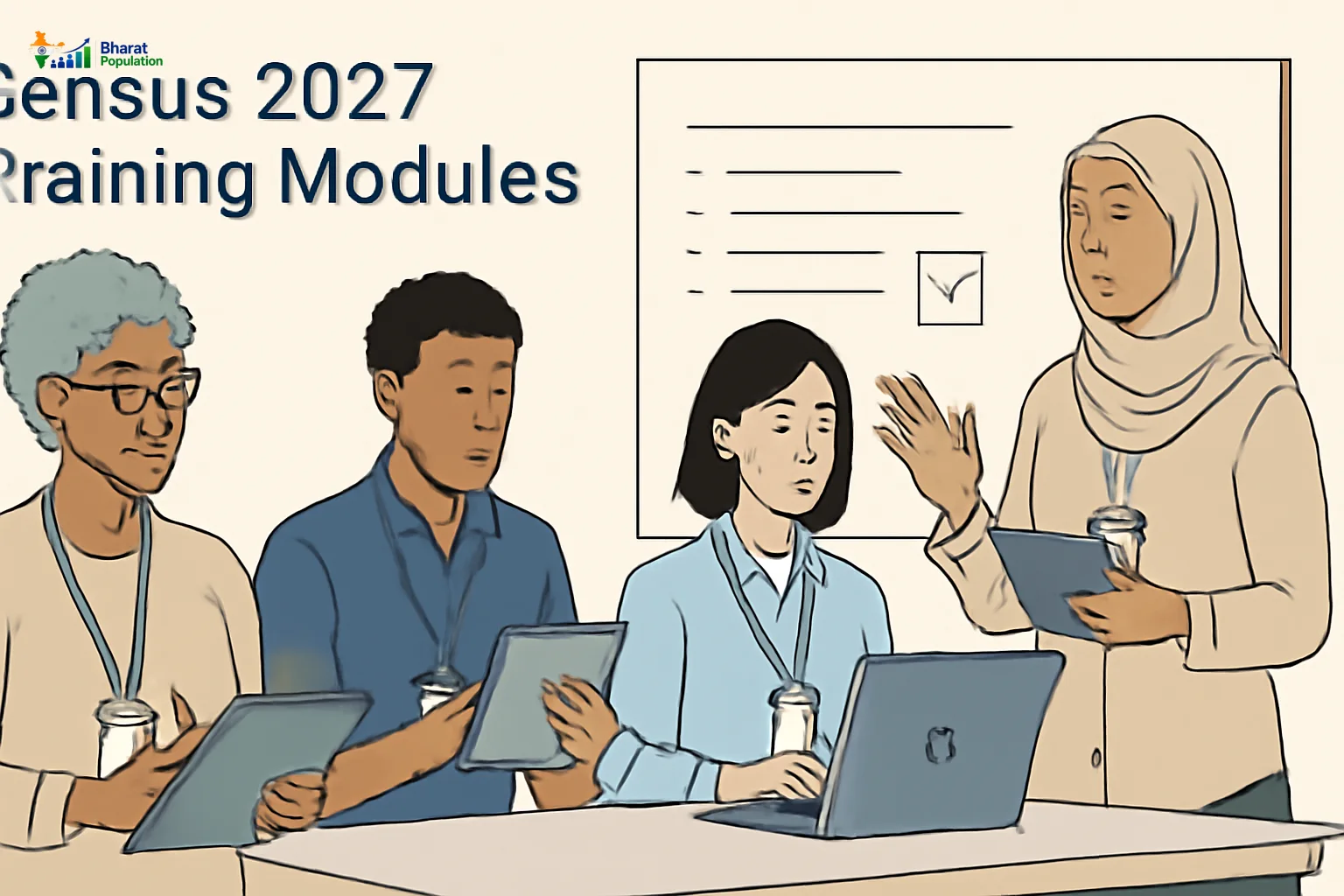
More than 80,000 training batches will be held across the country, utilizing phase-specific training modules. This approach allows enumerators to focus on the unique requirements of each phase, reducing the learning curve and fostering a deep understanding of specific tasks.
3. Multilingual Instruction
Recognizing India’s linguistic diversity, detailed instruction manuals have been prepared in 19 languages. This multi-lingual training ensures that enumerators can comprehend and convey information accurately, regardless of the region in which they operate.
4. Enhanced Data Quality
The structured training framework is designed to enhance data collection quality. By preparing enumerators specifically for their roles within each phase, the census aims to mitigate errors and inconsistencies, ensuring the reliability of the data compiled.
5. Long-Term Operational Implementation
Local-level technical personnel, totaling around 18,600, are projected to assist with census tasks over about 550 days. This extended support ensures that practical application follows the training, reinforcing the training’s impact on real-world data collection.
Potential Challenges Addressed
Census operations involve numerous challenges, from logistical issues to varying local conditions. Phase-specific training equips enumerators to tackle these challenges more effectively. The training facilitates strategic planning, enabling them to adapt their approach based on the specific context of their assigned areas.
Conclusion
As Census 2027 approaches, the phase-specific training initiative emerges as a cornerstone of the overall strategy aimed at enhancing accuracy and operational efficiency. By emphasizing tailored education for enumerators and supervisors, India is positioning itself to collect reliable and insightful demographic data that will serve its population for years to come.
FAQs
1. What are the two phases of Census 2027?
The two phases are the Houselisting and Housing Census (HLO) and the Population Enumeration (PE).
2. How many enumerators are being trained for the census?
Approximately 31 lakh enumerators and supervisors are being trained.
3. Why is multilingual training important?
Multilingual training is crucial to ensure comprehension and effective communication across India’s diverse linguistic landscape.
4. What is the duration of training for enumerators?
Training sessions will be conducted through over 80,000 batches, tailored for phase-specific requirements.
5. How does phase-specific training impact data quality?
It equips enumerators with focused knowledge, reducing errors and enhancing the accuracy of the data collected.