What Happens in Phase I and Phase II of Census 2027
Overview of Census 2027
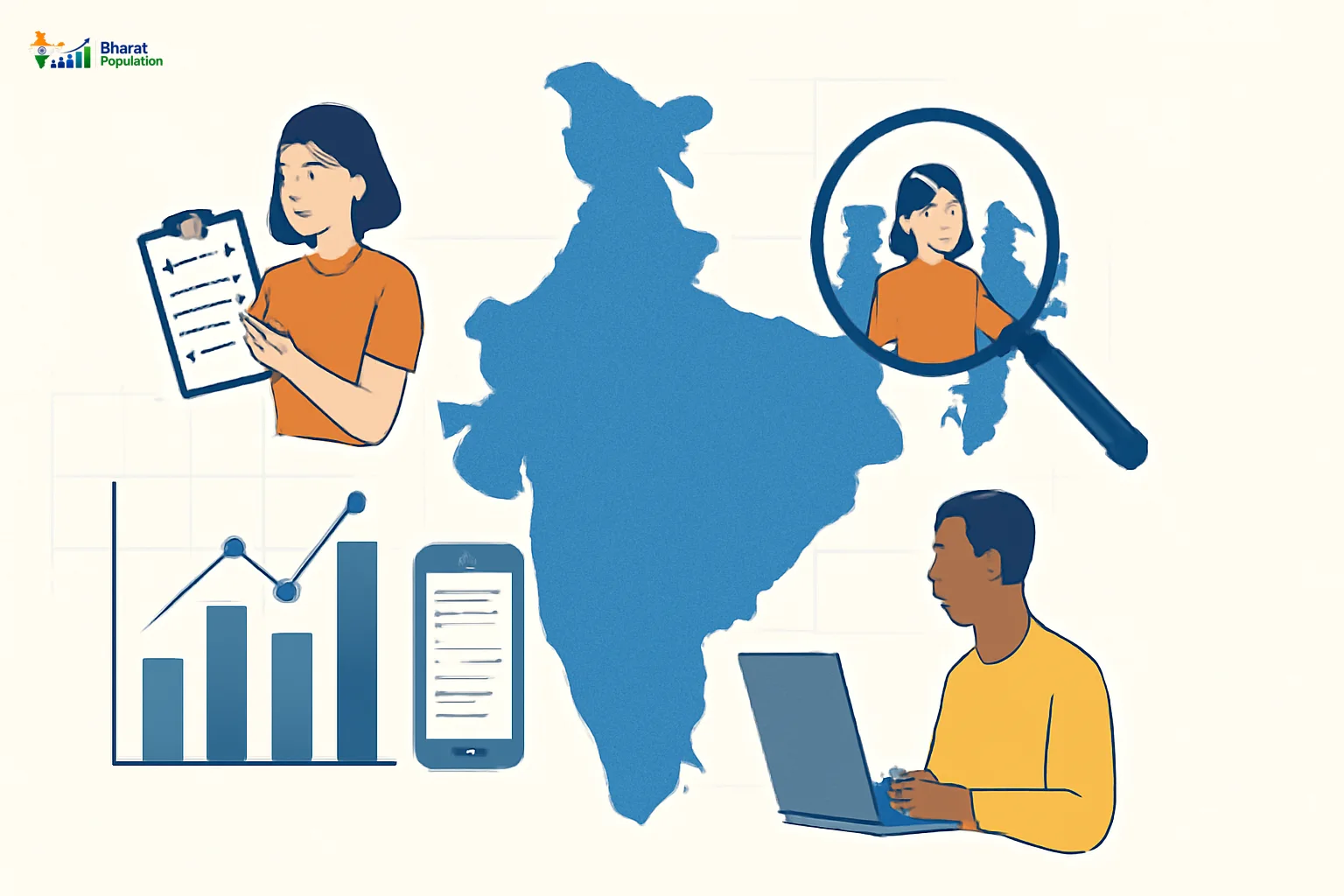
Census 2027, the 16th Census of India, marks a significant milestone as it implements a fully digital approach to data collection. Scheduled to be conducted in two distinct phases, this Census aims to gather comprehensive information about the country’s population, housing conditions, and socio-economic indicators.
Phase I: Houselisting and Housing Census (HLO)
Phase I, referred to as Houselisting and Housing Census, is scheduled from April to September 2026. This phase serves a dual purpose: to collect vital data on housing conditions and to provide a frame for the subsequent population enumeration.
Key Features of Phase I
- Data Collection: Enumerators will gather information regarding the physical condition of houses, household amenities, and the possessions of households. A structured questionnaire with 33 questions has been developed to ensure comprehensive data compilation.
- Self-Enumeration Opportunity: A 15-day Self-Enumeration window will precede the house-to-house listing, allowing households to complete the questionnaire digitally, should they choose.
- Digital Tools: For the first time, Census 2027 introduces a mobile application to facilitate the collection and storage of data securely, enhancing efficiency through digital means.
Importance of Phase I
Phase I is crucial as it not only establishes the groundwork for Phase II but also aids in accurate demographic mapping. The detailed knowledge gained regarding housing conditions will influence policy formulation and planning of essential services like healthcare and education.
Phase II: Population Enumeration (PE)
Phase II of Census 2027 is set to take place in February 2027, although for specific regions such as Ladakh and certain snow-bound areas in Jammu and Kashmir, Uttarakhand, and Himachal Pradesh, it will coincide with the Houselisting phase in September 2026.
Key Features of Phase II
- Demographic Data Collection: This phase will focus on collecting demographic information, including socio-economic factors, educational attainment, migration patterns, and fertility rates. Additionally, caste enumeration will be conducted as part of this phase.
- Data Security Measures: The Government has implemented robust encryption and multiple security protocols to ensure that the data collected during both phases remains confidential and secure.
- Monitoring and Management: A Census Management & Monitoring System (CMMS) will be utilized for real-time tracking of the enumeration process, ensuring accuracy and efficiency throughout the operation.
Significance of Phase II
The culmination of both phases will provide crucial insights into the population dynamics of India. The data collected will serve as a basis for planning and allocation of resources to various sectors, improving governance and service delivery at local and national levels.
Timeline Overview
| Phase | Timeline | Activities |
|---|---|---|
| Phase I: Houselisting | April to September 2026 | House-to-house listing and condition assessment |
| Phase II: Population Enumeration | February 2027 September 2026 (for certain areas) | Collection of demographic and socio-economic data |
Conclusion
Census 2027 promises to be a comprehensive and technologically advanced process. With substantial government investment and meticulous planning, the Census aims to provide a detailed portrait of India’s population and housing, ultimately supporting evidence-based policymaking.
FAQs
What is the reference date for Census 2027?
The reference date for Census 2027 is set at 00:00 hours on 1 March 2027.
How will data be collected during the Census 2027?
Data will be collected using digital tools, including a dedicated mobile application for enumerators and an optional self-enumeration option for households.
What type of information will be collected during Phase II?
Phase II will gather information on demographics, socio-economic status, education, migration, fertility, and caste enumeration.
Why is Phase I important?
Phase I establishes a foundation for the census by collecting critical housing data that informs later phases and public policy.
How secure is the data collected in Census 2027?
Robust encryption and multi-factor authentication measures are being implemented to ensure the confidentiality and security of data collected.
Are there any specific areas with different timelines for Phase II?
Yes, for regions like Ladakh and certain snow-bound areas, Phase II will be conducted in September 2026 instead of February 2027.