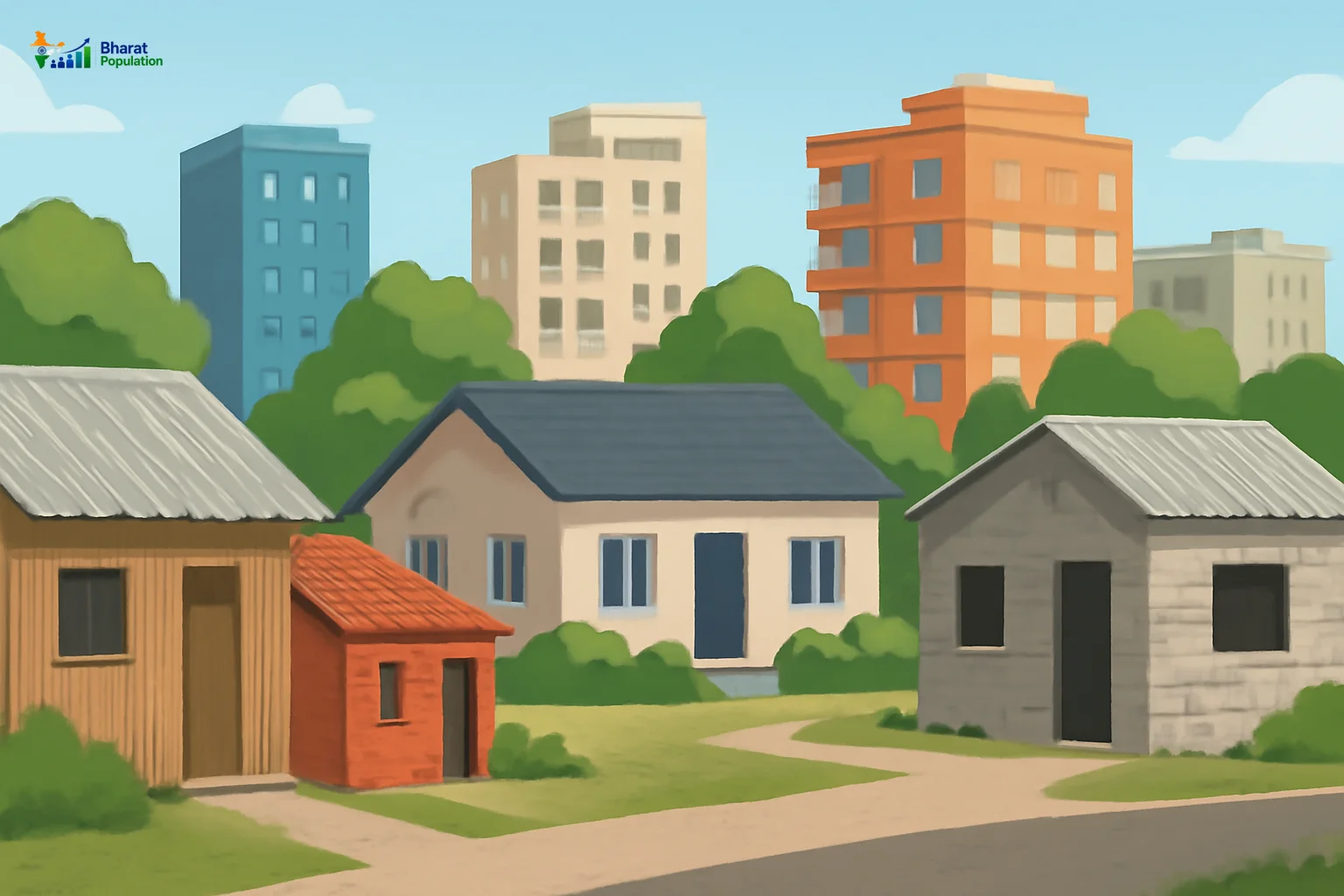
How Census 2027 Records the Use and Condition of a Census House
Introduction to Census 2027
Census 2027 marks a significant milestone as India’s first digital census, slated for completion in February 2027. It officially commences with the Houselisting and Housing Census (HLO) phase, taking place from April to September 2026. This phase plays a crucial role in collecting detailed data about the housing situation across the country.
Understanding Houselisting and Housing Census (HLO)
The HLO is comprised of essential questions designed to gather comprehensive information about each Census house. Specifically, Questions 1 through 8 focus on identifying and assessing the condition of these houses.
- Question 1: Records the line number.
- Question 2: Records the building number.
- Question 3: Records the Census house number.
- Questions 4-6: Document the predominant materials used in the floor, wall, and roof of the house.
- Question 7: Ascertains the use of the Census house (e.g., residential, commercial).
- Question 8: Evaluates the overall condition of the Census house (good, repair needed, etc.).
Importance of Assessing House Use and Condition
The responses to Questions 7 and 8 are particularly vital for understanding the living standards and housing conditions of households across India. They provide insights into residential patterns, the state of housing infrastructure, and community needs.
Census 2027 Process and Timeline
Officially notified on June 16, 2025, Census 2027 follows two distinct phases: Houselisting and Housing Census (Phase I), and Population Enumeration (Phase II). Phase I focuses on capturing housing conditions and various amenities available to households.
During this phase, enumerators will utilize a secure digital application to collect data directly from households, ensuring accuracy and timely data submission. This approach reflects advances in technology and aims to streamline the census process.
Data Collection Techniques
The data collection during the HLO phase is further enhanced by a 15-day Self-Enumeration window, allowing households to provide information independently prior to enumerator visits. This optional method empowers citizens to contribute to the census process positively.
Why the Condition of Census Houses Matters
Understanding the condition of houses is paramount for several reasons:
- Policy Making: Accurate data informs government policies on housing, urban planning, and infrastructure development.
- Resource Allocation: Identifying areas with significant housing challenges enables targeted aid and resources.
- Social Welfare Programs: Conditions reflected in the census can lead to interventions for vulnerable populations.
Frequently Asked Questions
1. What types of buildings are included in the Census house assessment?
All types of dwelling places, including apartments, houses, and commercial buildings, are assessed under Census 2027.
2. How can households participate in Self-Enumeration?
Households can log in using their mobile numbers during the designated Self-Enumeration period to fill out their details online.
3. Is the data collected from the census confidential?
Yes, the data collected will be used solely for statistical purposes and development planning, ensuring privacy and security.
4. How will the collected data impact future planning?
The insights gathered will shape policies regarding housing, urbanization, and resource distribution tailored to community needs.
5. When will the population enumeration phase occur?
Phase II, which involves population enumeration, is scheduled for February 2027, following the HLO phase.
Conclusion
Census 2027 is pivotal in shaping India’s understanding of housing conditions and their implications for policy and community development. By detailing the use and condition of Census houses, this initiative will provide crucial data that can drive change at multiple levels.
- For further information about the Census process and insights, visit BharatPopulation – Census.