How India’s First Modern Census Began Between 1865 and 1872
The Introduction to India’s First Modern Census
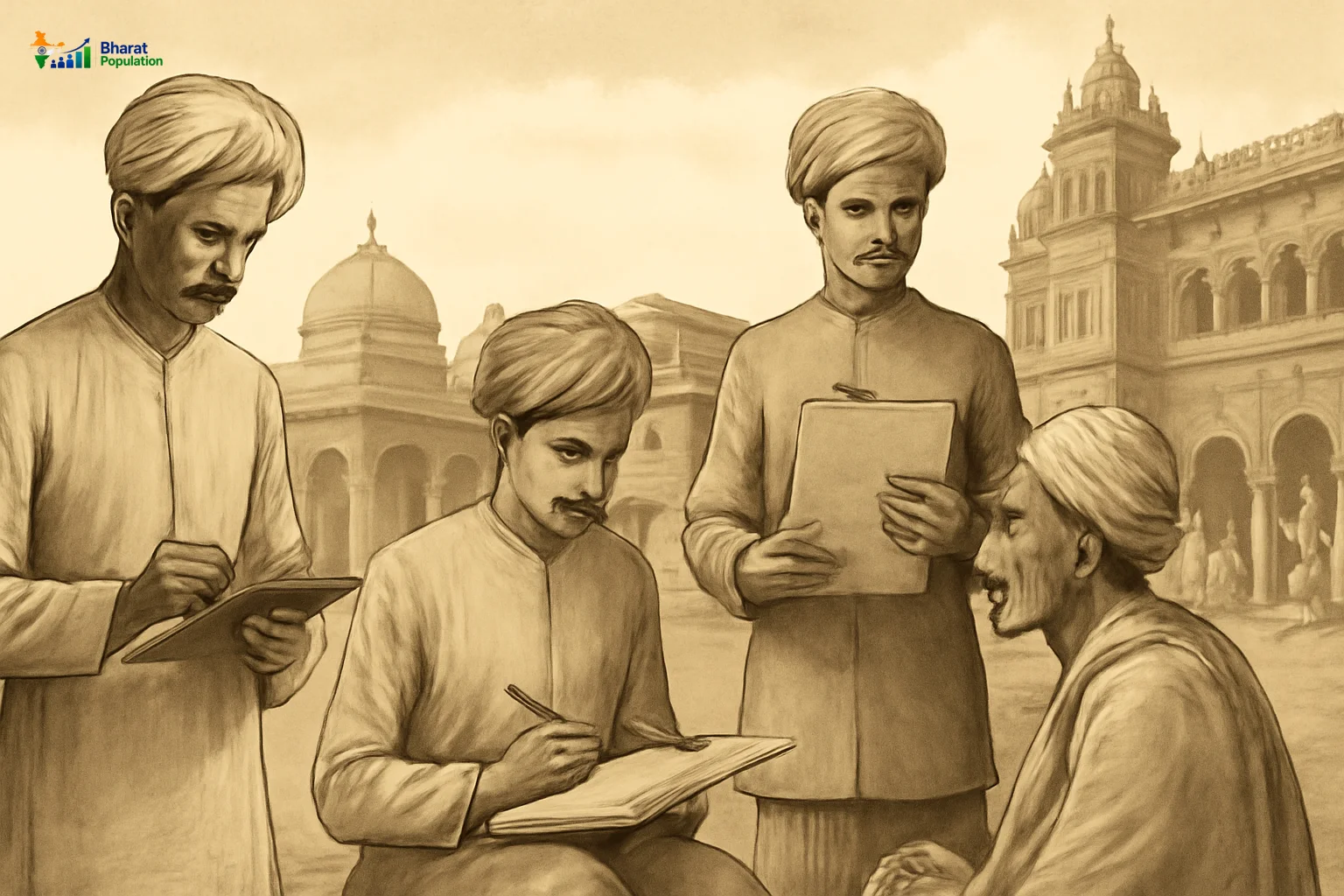
The first modern population census in India was conducted between 1865 and 1872. This initiative was crucial as it transitioned from earlier, less organized methods of population enumeration to a systematic approach aimed at gathering detailed demographic data.
Historical Context
Population enumeration in India has ancient roots, going back to Kautilya’s Arthashastra and Abul Fazl’s Ain-e-Akbari. However, the first modern census signified a shift in methodology, emphasizing the scientific collection of demographic data. Prior methods varied significantly between regions and often lacked coordination.
A Non-Synchronous Enumeration
The census undertaken between 1865 and 1872 was unique in that it was non-synchronous. Unlike traditional census methods that take place on a single day, this census occurred at various times across different regions. Despite the challenges posed by this approach, the year 1872 is recognized as the start of India’s modern census series.
The Transition to Synchronous Censuses
The foreshadowing of a more organized census occurred in 1881, which was the first coordinated and synchronous census. This event was pivotal, as it marked the establishment of a decennial (every ten years) census system that allowed for comprehensive data collection across the country.
Significance of the 1872 Census
The census conducted from 1865 to 1872 laid the foundation for the Indian census operations that would follow. It enabled the government to understand population dynamics better and informed various policies related to administration and resource allocation.
Census Methodologies Over Time
While the initial census was a significant step, the subsequent censuses refined data collection methodologies, improved coverage, and adjusted questions to capture more nuanced social conditions. Each decennial census has enhanced accuracy and the detail of data reported, evolving in response to the needs of a developing nation.
The Role of Census in Modern India
Today, population censuses are essential tools for understanding demographic trends, urbanization, socioeconomic conditions, and more. They inform governmental policy-making and resource distribution, thus playing a crucial role in shaping India’s development trajectory.
Frequently Asked Questions (FAQs)
1. What years did the first modern census take place?
The first modern census in India was conducted between 1865 and 1872.
2. How was the 1872 census different from previous enumerations?
The 1872 census was non-synchronous, meaning it took place at different times in various regions rather than on a single date.
3. What major change happened in 1881 regarding the census?
The 1881 census was the first coordinated and synchronous census in India, establishing a standard for future decennial censuses.
4. Why is the census significant for governance?
The census provides vital data for understanding population dynamics, which helps in informed policymaking and resource allocation.
5. How have census methods evolved since the first modern census?
Subsequent censuses have refined data collection methods, expanded coverage, and adjusted the types of questions asked to better capture the social conditions of the country.
Conclusion
The journey from the first modern census to the current day demonstrates India’s commitment to understanding its population through data. As we approach Census 2027, the foundations laid in the 19th century continue to guide this crucial exercise in demographic understanding.