How HLO Data Moves from the Field to Census Servers
Understanding the HLO Mobile Application
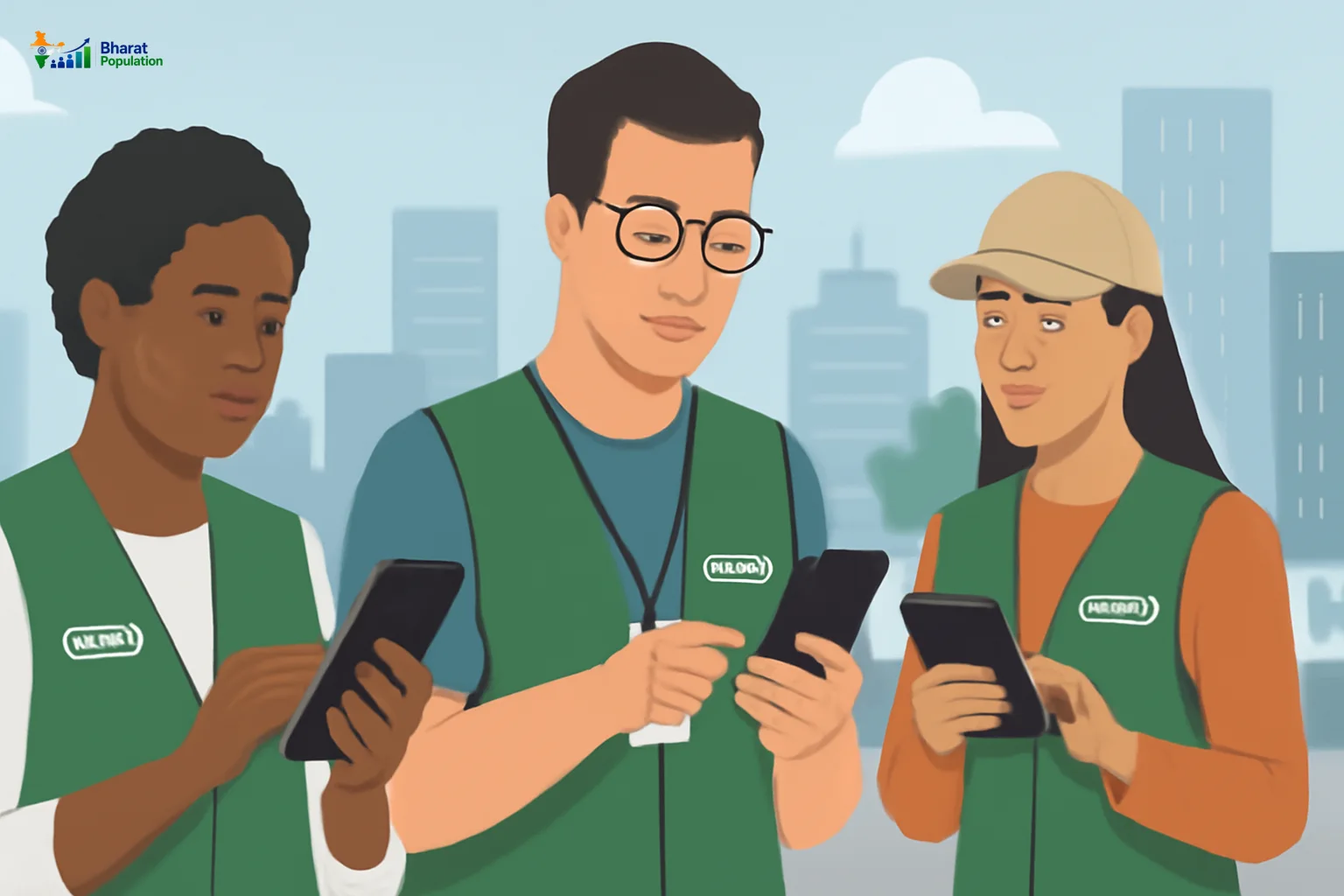
The Census 2027 Houselisting and Housing Census (HLO) incorporates advanced technology to facilitate data collection and transmission. The HLO Mobile Application serves as a secure, offline tool designed specifically for enumerators to gather houselisting data digitally. This eradicates the need for traditional, paper-based methods, enhancing efficiency in data acquisition.
The Role of Enumerators
Enumerators play a critical role in this process. Only those registered on the Census Management and Monitoring System (CMMS) portal are authorized to use the HLO Mobile Application. With this application, enumerators can instantly upload collected data directly to census servers, ensuring real-time data transmission.
Features of the HLO Mobile Application
- Compatible with both Android and iOS platforms.
- Available in 16 regional languages, catering to various linguistic demographics.
- Allows for the confirmation of data via the Self-Enumeration ID shared by respondents.
Data Collection Phases
Census 2027 is structured in two phases: Houselisting and Housing Census (HLO) followed by Population Enumeration (PE). The HLO phase is scheduled from April to September 2026, featuring a definitive sequence:
- A 15-day Self-Enumeration window preceding the main houselisting phase.
- A 30-day house-to-house enumeration process conducted across states.
Process of Data Transmission
Once the enumerators collect data using the HLO Mobile Application, it is securely encrypted and transmitted to government servers. This ensures that measures against data breaches and unauthorized access are firmly in place. The use of a central CMMS portal allows officials at various administrative levels to monitor the flow of data and track enumeration progress.
Quality Assurance Mechanisms
To guarantee the accuracy of data collection during the HLO phase, a pre-test was conducted nationwide in November 2025 covering about 5,000 blocks. This exercise aimed to validate the methodologies and the tools used in data collection, thus reinforcing confidence in the process.
Post-Collection Analysis
After data upload, various analytical procedures will be undertaken to process the information efficiently. The data collected in the HLO phase focuses on various parameters such as household amenities, housing conditions, and assets, but not on population counts. Thus the nuances captured during this phase offer an extensive overview of living conditions throughout the country.
Conclusion
The integration of technology in the census process, particularly through the HLO Mobile Application, marks a significant evolution in data gathering methods. By ensuring real-time data transmission from the field to census servers, the accuracy and efficiency of Census 2027 are greatly enhanced.
FAQs
1. What is the HLO Mobile Application?
The HLO Mobile Application is a secure tool for enumerators to collect and upload houselisting data during Census 2027.
2. How does data transmission work?
Data collected through the HLO app is encrypted and directly uploaded to government servers, ensuring secure transmission.
3. Who can access the HLO Mobile Application?
Only enumerators registered on the CMMS portal can use the HLO Mobile Application.
4. What are the phases of Census 2027?
Census 2027 consists of two phases: the Houselisting and Housing Census (HLO) and the Population Enumeration (PE).
5. Why is the Self-Enumeration process important?
Self-Enumeration allows citizens to provide data directly, which can then be verified by enumerators during field visits.
6. How will data quality be ensured?
Field operations are monitored through the CMMS portal, and pre-tests have been conducted to validate the processes.