How Internet, Computer and Phone Access Are Covered in Census 2027 HLO
Understanding Census 2027 HLO
The Census 2027 in India marks a transformative step in capturing the demographics and technological reach of the populace. Scheduled for implementation between April and September 2026, this census will focus on various aspects, including technological access within households. Particularly, the incorporation of internet, computer, and phone accessibility is pivotal as it highlights the extent of digital penetration across the country.
Key Questions on Digital Access
The official Household Listing and Housing Census (HLO) schedule includes critical questions designed to gather data about the digital assets possessed by households:
- **Question 26**: Do you have a radio or transistor?
- **Question 27**: Do you have a television?
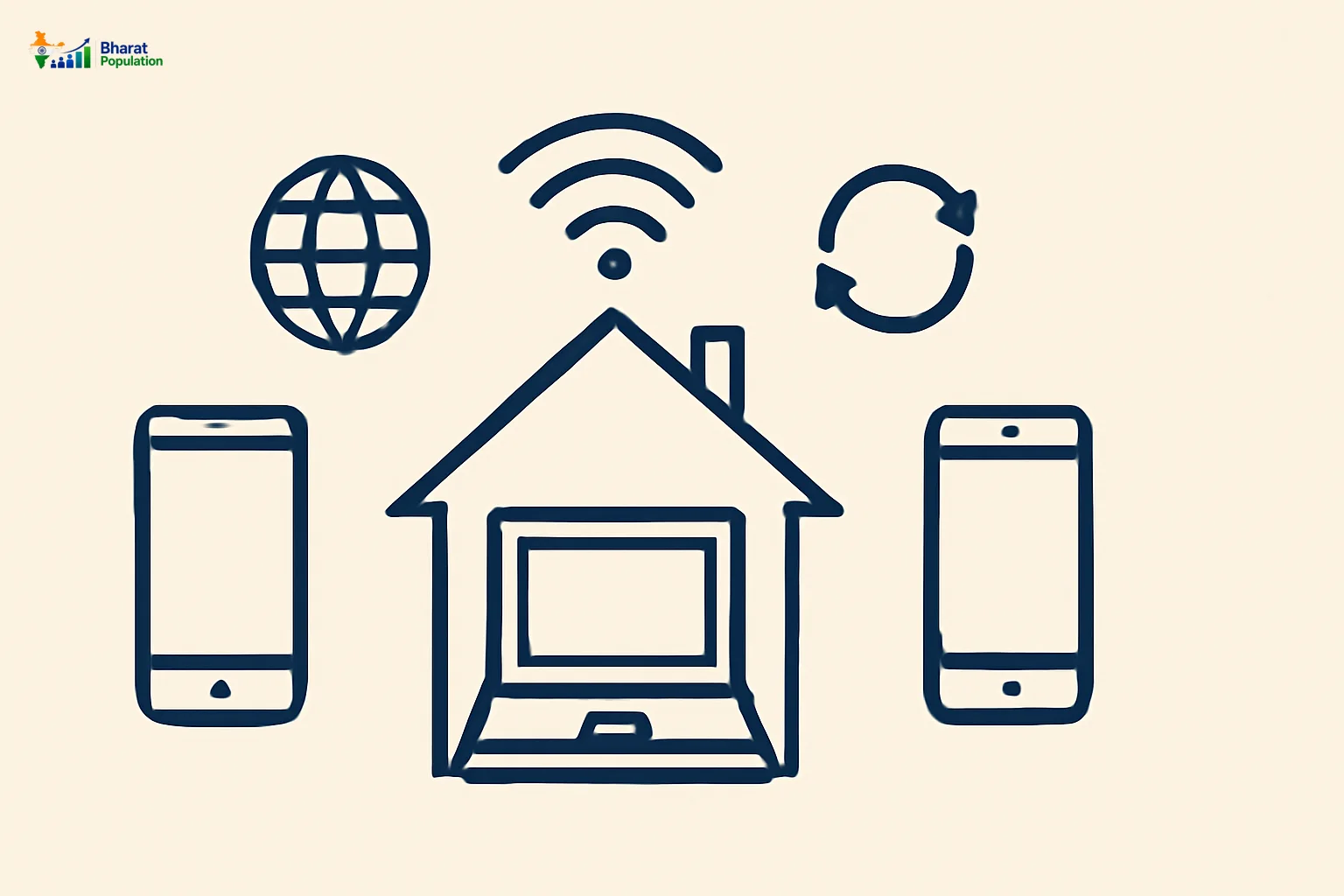
- **Question 28**: Do you have access to the internet?
- **Question 29**: Do you own a laptop or computer?
- **Question 30**: Do you have a telephone, mobile phone, or smartphone?
These questions, categorized under assets, aim to provide insights into the technological landscape within Indian homes. Understanding household access to these devices is essential for planning and policy-making.
The Importance of Digital Census 2027
Census 2027 is distinguished as India’s first fully digital census. Information will be collected via a mobile application used by enumerators, enhancing accuracy and efficiency. This modern approach signifies a shift towards embracing technology to better reach and gather data from diverse populations. The mobile application facilitates a seamless field-to-server data transfer, eliminating manual errors tied to traditional paper-based methods.
Self-Enumeration Portal
Additionally, a Self-Enumeration option will be available, allowing households to input their data online. Each participating household will receive a unique Self-Enumeration ID (SE ID), which they must share with the enumerator during follow-up visits, ensuring both confidentiality and validation.
Timeline for Census 2027
The Census is structured into two major phases. As per the official timeline:
- **Phase I (Houselisting and Housing Census – HLO)**: April to September 2026
- **Phase II (Population Enumeration – PE)**: February 2027
This phased approach will ensure comprehensive data collection while accommodating regional variations across the country, particularly in areas that face unique challenges, such as harsh weather conditions.
Digital Accessibility Metrics
In light of evolving technology trends, data from Census 2027 on household access becomes increasingly relevant. Collecting detailed statistics allows for:
- **Identifying Gaps**: Understanding regions where access to technology is limited.
- **Policy Formulation**: Supporting the development of targeted interventions to enhance digital literacy and accessibility.
- **Infrastructure Development**: Guiding government and private sector investments in digital infrastructure.
FAQs
1. What is the significance of Question 28 in Census 2027?
Question 28 addresses access to the internet, providing crucial insights into digital reach across households and regions.
2. How is data collected for Census 2027?
Data is collected via a mobile application by enumerators during field visits, and households can also opt for Self-Enumeration.
3. When will Census 2027 take place?
The Houselisting phase is scheduled from April to September 2026, followed by the Population Enumeration phase in February 2027.
4. Is self-enumeration mandatory?
No, self-enumeration is optional; enumerators will still visit households that do not choose to self-enumerate.
5. What data security measures are in place for Census 2027?
Data privacy is ensured through encryption and multi-factor authentication for both Self-Enumeration and enumerator data collection.
6. How will the data help in planning for future digital initiatives?
The collected data will reveal trends and gaps in digital access, aiding effective policy-making and infrastructure investment.